
How Dubai’s Property Market Defied War in Its First Month
- Stable demand amid geopolitical tensions
- Government policies supporting market confidence
- Inbound investment from shifting global assets
- Luxury segment remains particularly resilient
- Rise of digital property transactions
- Developer confidence and project launches
- Stable rental market supports investor returns
- International buyer demographics evolve
- Market transparency and regulatory strength
- Tourism rebound bolsters property interest
Stable demand amid geopolitical tensions
Even as war broke out in regions close to Dubai, the city’s property market showed an unexpected steadiness. Local and international buyers continued to seek investment opportunities, driven by Dubai’s reputation as a safe haven amid turmoil. This created a stable base of demand that kept transaction volumes healthier than anticipated.
Government policies supporting market confidence
Proactive measures from Dubai’s government played a vital role in maintaining investor confidence. Initiatives such as visa reforms, easing of property ownership laws, and incentives for foreign investors offered reassurance to buyers, encouraging continued engagement despite the challenging external environment.
Inbound investment from shifting global assets
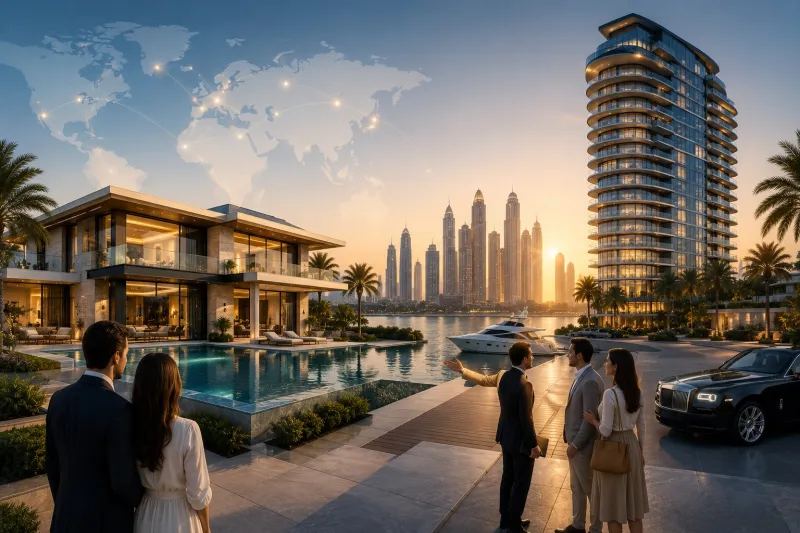
With instability in other regions prompting divestments, a portion of global capital looked towards Dubai as an alternative. Investors reallocated assets from risky war-affected zones to the city’s real estate market, attracted by its stability, transparency, and high-quality infrastructure.
Luxury segment remains particularly resilient
The luxury property sector in Dubai demonstrated an impressive level of resilience. High-net-worth individuals and expatriates continued acquiring premium apartments and villas, supported by Dubai’s thriving economy and lifestyle advantages, keeping prices in the luxury segment largely buoyant.
Rise of digital property transactions
Adoption of technology accelerated in Dubai’s property dealings during the first month of war. Digital platforms facilitated virtual viewings, online contract signing, and remote payments, enabling buyers and sellers to continue transactions seamlessly without physical interactions.
Developer confidence and project launches
Contrary to the expected pause, developers proceeded with new project launches. This confidence was backed by pre-existing demand forecasts and the city’s strategic positioning. The continuation of supply-side activity contributed to market vibrancy, encouraging more buyer participation.
Stable rental market supports investor returns
Dubai’s rental market remained stable, providing steady income streams to property investors. The city’s diverse population and relatively low vacancy rates helped landlords maintain healthy yields even as broader geopolitical tensions unfolded.
International buyer demographics evolve
The profile of international buyers in Dubai shifted subtly during the first month of war. More buyers from Asia and Africa emerged, balancing out fluctuations from European and Middle Eastern investors impacted directly by conflict zones, thus diversifying the market base.
Market transparency and regulatory strength
Dubai’s strictly regulated property market ensured transparency and security for investors during uncertain times. The robust legal framework minimized risk concerns, reinforcing trust and helping maintain momentum despite external disruptions.
Tourism rebound bolsters property interest
The partial rebound in tourism also contributed positively, as increased visitor numbers signaled economic vitality. Foreign visitors often explore property investment options when present, indirectly supporting demand and market liquidity during the period.
Writer focused on delivering informative, accessible content