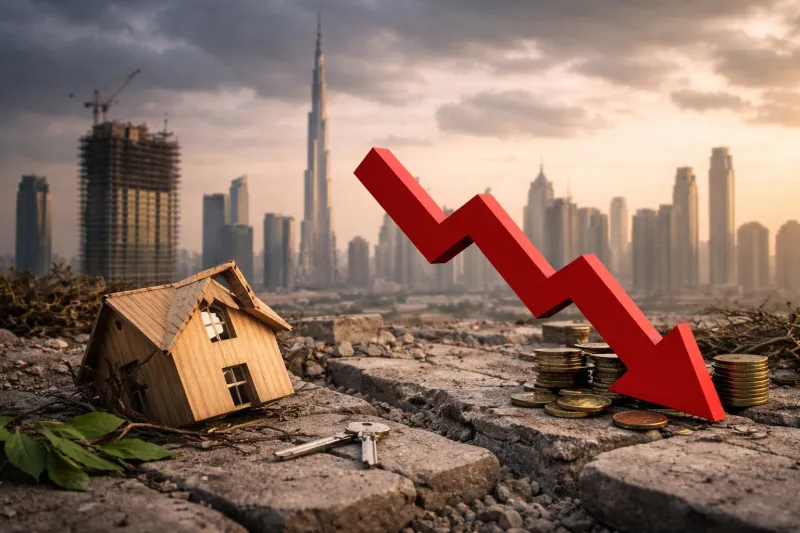
Dubai real estate faces initial signs of market weakness
- Slowing sales volumes signal cautious buyer sentiment
- Rising inventory levels put pressure on prices
- Rental yields begin to moderate after rapid growth
- Financial institutions adopt more stringent lending practices
- Foreign investment growth rate slows down
- New project launches face delays and cancellations
- Government measures aim to stabilize the market
- Shift toward more affordable housing options
- Impact of global economic uncertainties on Dubai’s market
- Technological innovation in response to market changes
Slowing sales volumes signal cautious buyer sentiment
Recent reports from leading property consultancy firms indicate a noticeable decline in sales transactions across Dubai's prime residential and commercial sectors. Buyers are exhibiting increased caution, influenced by global economic volatility and tightened lending criteria. This reduced appetite is reflected in a slower turnover of properties, despite competitive pricing strategies from developers.
Rising inventory levels put pressure on prices
Developers are experiencing an accumulation of unsold units, particularly in newly launched projects. This heightened supply contrasts with the softening demand, creating increased competition among sellers. As a consequence, price growth has decelerated in many segments, and some developers have resorted to incentives and discounts to attract buyers.
Rental yields begin to moderate after rapid growth
Dubai’s rental market, which previously enjoyed robust returns, is also witnessing a slowdown in yield expansion. Landlords face challenges in sustaining rental price increases as tenants negotiate more aggressively. The moderation in rental yields reflects the broader cooling trend, impacting investors who rely on steady income from their properties.
Financial institutions adopt more stringent lending practices
Banks and mortgage providers have tightened credit standards amid concerns about global economic uncertainty and regional geopolitical risks. Stricter loan-to-value ratios and more rigorous income verification processes are making it harder for potential buyers to secure financing. This shift has contributed to the diminished purchasing power within the market.
Foreign investment growth rate slows down
Historically a major driver of Dubai’s property boom, foreign investment has decelerated in recent quarters. Factors such as fluctuating oil prices, currency volatility, and shifting international market dynamics have tempered enthusiasm. Additionally, emerging destination markets are drawing attention away, creating stiffer competition for capital inflows.
New project launches face delays and cancellations
The real estate development sector is feeling the impact of the market’s softness, with some announced projects experiencing postponements or cancellations. Developers are reassessing their portfolios to avoid overexposure in an uncertain environment, focusing instead on completing existing schemes and adjusting future supply plans to align with demand realities.
Government measures aim to stabilize the market
Dubai’s authorities have introduced several initiatives designed to sustain confidence and encourage transactions. These measures include easing property ownership regulations for expatriates, streamlining registration processes, and promoting transparency. Such interventions are intended to balance market supply and demand while stimulating long-term investment.
Shift toward more affordable housing options
The evolving market conditions have heightened demand for affordable and mid-market housing segments. Buyers and renters are increasingly seeking value-focused properties rather than luxury units. This shift is prompting developers to adjust their offerings, with more focus on practical designs and cost-effective locations that appeal to a broader client base.
Impact of global economic uncertainties on Dubai’s market
External factors such as inflationary pressures, supply chain disruptions, and geopolitical tensions have reverberated through Dubai’s real estate landscape. Investors are weighing these risks carefully, influencing their decisions. The interconnected nature of global markets means Dubai's property sector is not immune to international economic headwinds affecting liquidity and confidence.
Technological innovation in response to market changes
In light of shifting market dynamics, real estate companies in Dubai are increasingly leveraging technology to maintain competitiveness. Virtual property tours, AI-driven pricing models, and enhanced digital marketing are becoming standard practices. These tools aim to enhance customer engagement and streamline transactions amid a more challenging sales environment.
Writer focused on delivering informative, accessible content