
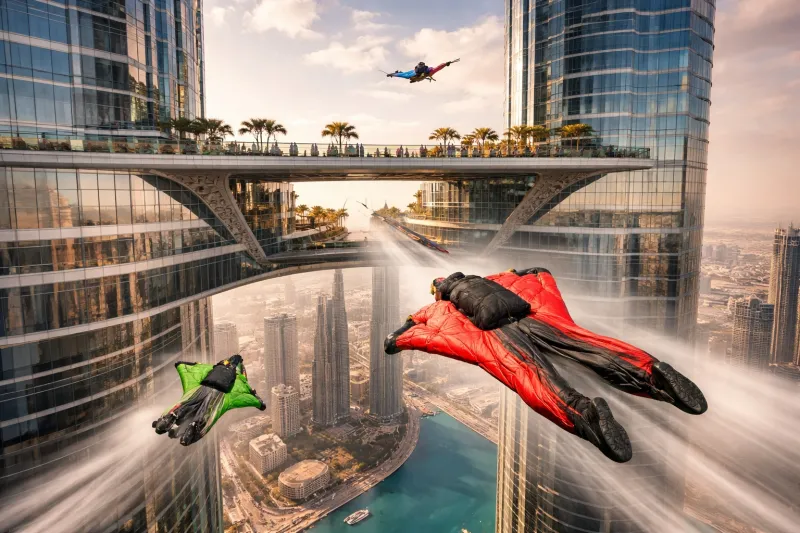
Sky-high stunt: Elite wingsuit flyers race through iconic Dubai skyscraper
- A daring fusion of sport and architecture
- The wingsuit flyers: elite athletes in flight
- Choosing the iconic Dubai skyscraper
- The technical challenges of urban wingsuiting
- Safety measures and planning
- The course: a complex aerial race track
- Innovations in wingsuit technology
- Capturing the spectacle: media and public reaction
- Environmental considerations and urban impact
- Future prospects for urban wingsuit flying
A daring fusion of sport and architecture
The event was a remarkable blend of extreme sports and architectural marvels. By choosing a world-famous Dubai skyscraper as their course, the wingsuit flyers transformed the building into an aerial playground, pushing the limits of human flight and urban daring.
The wingsuit flyers: elite athletes in flight
The participants were among the most experienced wingsuit pilots globally, each with thousands of jumps and years of training. Their precision and focus were vital to navigating the narrow spaces around the skyscraper, requiring split-second decisions and absolute control.
Choosing the iconic Dubai skyscraper
Dubai's skyline is renowned for its futuristic architecture and towering structures. The selected skyscraper offered a unique combination of height, design complexity, and accessibility, making it an ideal venue for this high-stakes wingsuit race.
The technical challenges of urban wingsuiting
Flying through a skyscraper presents unique aerodynamic challenges, including unpredictable wind currents, tight corridors, and the risk of collision with glass and structural elements. The athletes had to adapt their flying techniques to these conditions, honing their spatial awareness to unprecedented levels.
Safety measures and planning
Safety was paramount. Extensive planning, rehearsals, and coordination with building management and emergency services ensured that risks were minimized. Redundant safety protocols and real-time monitoring helped protect the flyers throughout the high-risk stunt.
The course: a complex aerial race track
The racetrack wound through open atriums, narrow windows, and external ledges, demanding exquisite precision. Each flyer had to memorize the course intricately and execute maneuvers at high speed, turning the skyscraper into a dynamic and challenging race arena.
Innovations in wingsuit technology
Participants utilized the latest advancements in wingsuit design, featuring enhanced fabric materials, tailored aerodynamics, and built-in safety gadgets. These innovations maximized maneuverability and stability, essential components for success in such a high-pressure environment.
Capturing the spectacle: media and public reaction
The event was extensively covered by international media, with stunning footage shared across social platforms. Public response was a mix of awe and admiration, highlighting widespread fascination with extreme sports and Dubai's ambition for world-class spectacles.
Environmental considerations and urban impact
Organizers took care to minimize environmental impact, scheduling the race during optimal weather and low foot-traffic hours. Respect for the urban environment ensured that the stunt remained a positive addition to Dubai’s vibrant cultural and sporting scene.
Future prospects for urban wingsuit flying
This event might signal a new era for wingsuit flying within cityscapes. With technology and safety improving rapidly, urban settings might become popular venues for extreme aerial sports, blending spectacle with innovation in unprecedented ways.
Business and lifestyle journalist